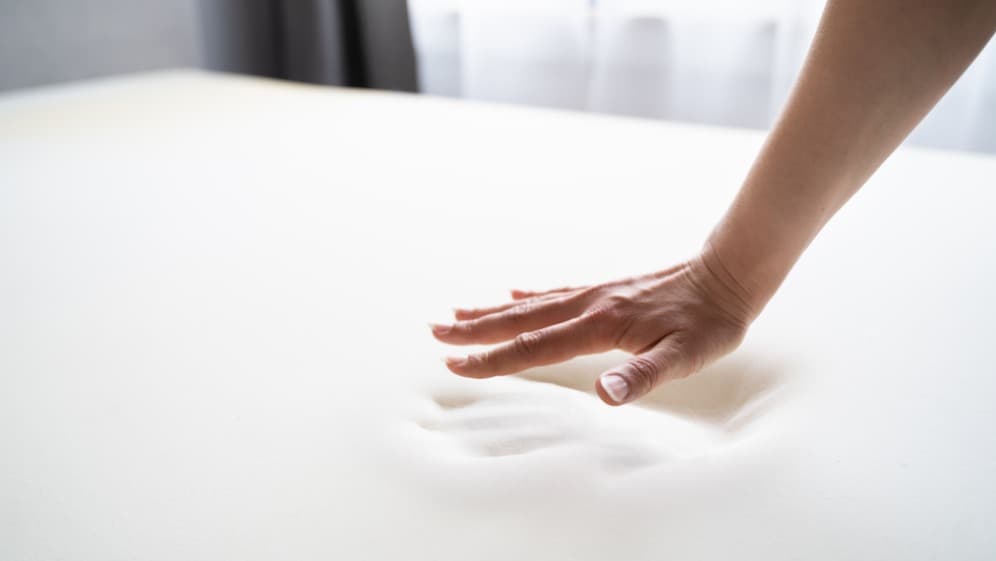
Viscoelastic foam improves medical and wellness products by redistributing pressure, adapting to body shape, and enhancing comfort, which helps reduce strain and supports faster recovery.
In healthcare, comfort is not a luxury. It is part of the treatment.
Hospitals, clinics, and even home care setups are beginning to look at materials differently. Not just in terms of softness or support, but in terms of recovery outcomes. Pressure points, circulation, temperature balance, and hygiene. All of it matters.
This is where viscoelastic foam has started to move beyond mattresses and into a much wider role. What was once seen as a comfort material is now being evaluated as a recovery tool.
At Sheela Foam, we have seen this shift up close. The conversation is no longer about “feels good.” It is about “helps heal better.”
Why traditional support materials fall short
In medical and wellness settings, surfaces are used for long durations. Patients may remain in one position for hours, sometimes days.
Traditional materials struggle here.
- Uneven pressure distribution
- Limited adaptability to body contours
- Higher risk of pressure sores
- Inconsistent temperature management
These are not small issues. They directly affect recovery time and patient comfort.
Which is why material selection has become a clinical decision, not just a procurement one.
What makes viscoelastic foam different
Viscoelastic foam behaves differently under pressure and heat. It responds to the body, rather than pushing back against it.
Key characteristics:
| Property | What it does | Why it matters in care settings |
| Pressure Redistribution | Spreads body weight evenly | Reduces pressure points |
| Slow Recovery | Adapts and retains shape temporarily | Supports stable positioning |
| Temperature Sensitivity | Softens with body heat | Improves comfort over time |
| Motion Absorption | Minimizes disturbance | Supports uninterrupted rest |
This combination makes it particularly suitable for environments where the body needs both support and relief.
The role of viscoelastic polyurethane foam in medical use
When we talk about healthcare-grade applications, the material often used is viscoelastic polyurethane foam.
It offers more controlled performance compared to standard variants.
Where it is being used:
1. Hospital mattresses
- Helps reduce the risk of bedsores
- Maintains consistent support for long durations
- Improves patient comfort during extended stays
2. Wheelchair cushions
- Distributes pressure across the seating surface
- Reduces discomfort from prolonged sitting
- Supports posture without stiffness
3. Orthopedic supports
- Neck pillows, back supports, joint cushions
- Adapts to specific body shapes
- Maintains alignment without creating pressure points
4. Rehabilitation equipment
- Used in therapy tables and recovery surfaces
- Enhances comfort during physiotherapy sessions
In each of these, viscoelastic polyurethane foam is not just filling space. It is actively contributing to care quality.
Pressure relief is not optional anymore
One of the most critical concerns in healthcare is pressure management.
When pressure builds up on specific points of the body, it restricts blood flow. Over time, this can lead to tissue damage.
Viscoelastic foam addresses this by redistributing weight.
Instead of concentrating pressure on a few areas, it spreads it across a larger surface. This reduces the risk of complications and supports faster recovery.
For buyers in healthcare, this is not a feature. It is a requirement.
Temperature and micro comfort in recovery
Recovery is not only about physical support. It is also about maintaining a stable environment around the body.
Viscoelastic materials respond to body heat, softening slightly to improve comfort. At the same time, newer designs are being combined with airflow-focused structures to prevent overheating.
This balance is important.
Too much heat leads to discomfort. Too little adaptability leads to stiffness.
The right material finds a middle ground.
Hygiene, durability, and long-term use
Medical and wellness products are used repeatedly, often by different users. Hygiene becomes critical.
Viscoelastic foam, when designed correctly, supports:
- Easy integration with protective covers
- Resistance to deformation over time
- Consistent performance even with regular use
Durability is not just about lifespan. It is about maintaining the same level of support throughout that lifespan.
At Sheela Foam, we design with this continuity in mind. Because in care environments, inconsistency is a risk.
Buyer considerations: what actually matters
For procurement teams and decision-makers, choosing the right foam is not about specifications alone. It is about outcomes.
Key questions to evaluate:
- Does the foam provide uniform pressure distribution?
- How does it perform under continuous use?
- Is the material consistent across batches?
- Does it support hygiene and maintenance standards?
These factors directly influence patient experience and operational efficiency.
The growing role in wellness products
The application is no longer limited to hospitals.
Wellness products are adopting viscoelastic foam for:
- Sleep recovery solutions
- Ergonomic seating
- Posture correction products
- Stress relief accessories
Consumers are becoming more aware. They are looking for products that do more than feel comfortable. They want products that support their body over time.
This is where material science meets everyday use.
Looking ahead: smarter foam for smarter care
The next phase of innovation is already underway.
We are seeing:
- Better integration with breathable structures
- More precise control over density and response
- Hybrid materials that combine support and airflow
In this context, materials like reticulated foam are also gaining attention for their open structure and improved ventilation, especially in applications where airflow becomes equally important as pressure relief.
Conclusion
The role of viscoelastic foam has evolved. It is no longer just about how a surface feels when you lie down. It is about how the surface supports the body for hours, days, and repeated use.
For medical and wellness products, this shift is significant.
Better materials lead to better outcomes. And better outcomes build trust.
At Sheela Foam, we continue to focus on this intersection of comfort and care. Because when material science is applied correctly, it does more than support. It helps people recover.
Also Read:-
Lightweight, durable, practical: how foam sheet manufacturers are reinventing everyday stationery
Is your foam a heat sink? The science of airflow (ASTM Test) and micro-climate
More Useful Links:-
Acoustic Soundproofing Panels | Top Foam Manufacturers In India | Memory Foam For Shoes
